
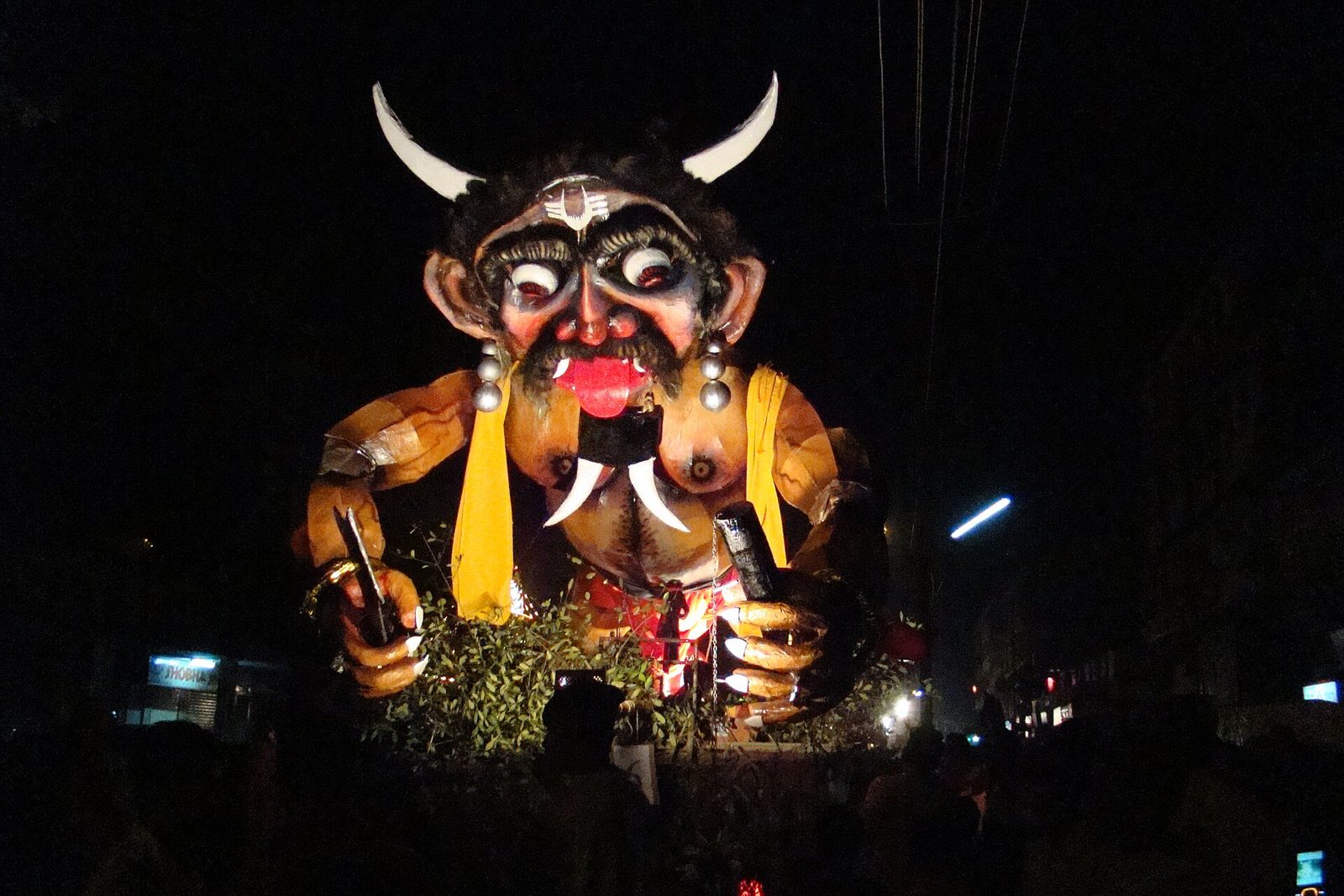
Narakasur night in Goa: the Diwali-eve effigies explained
What Goa's Narakasur night is, when the effigies burn in 2026, where to see them from Calangute, and how to watch safely after dark.
Read the guide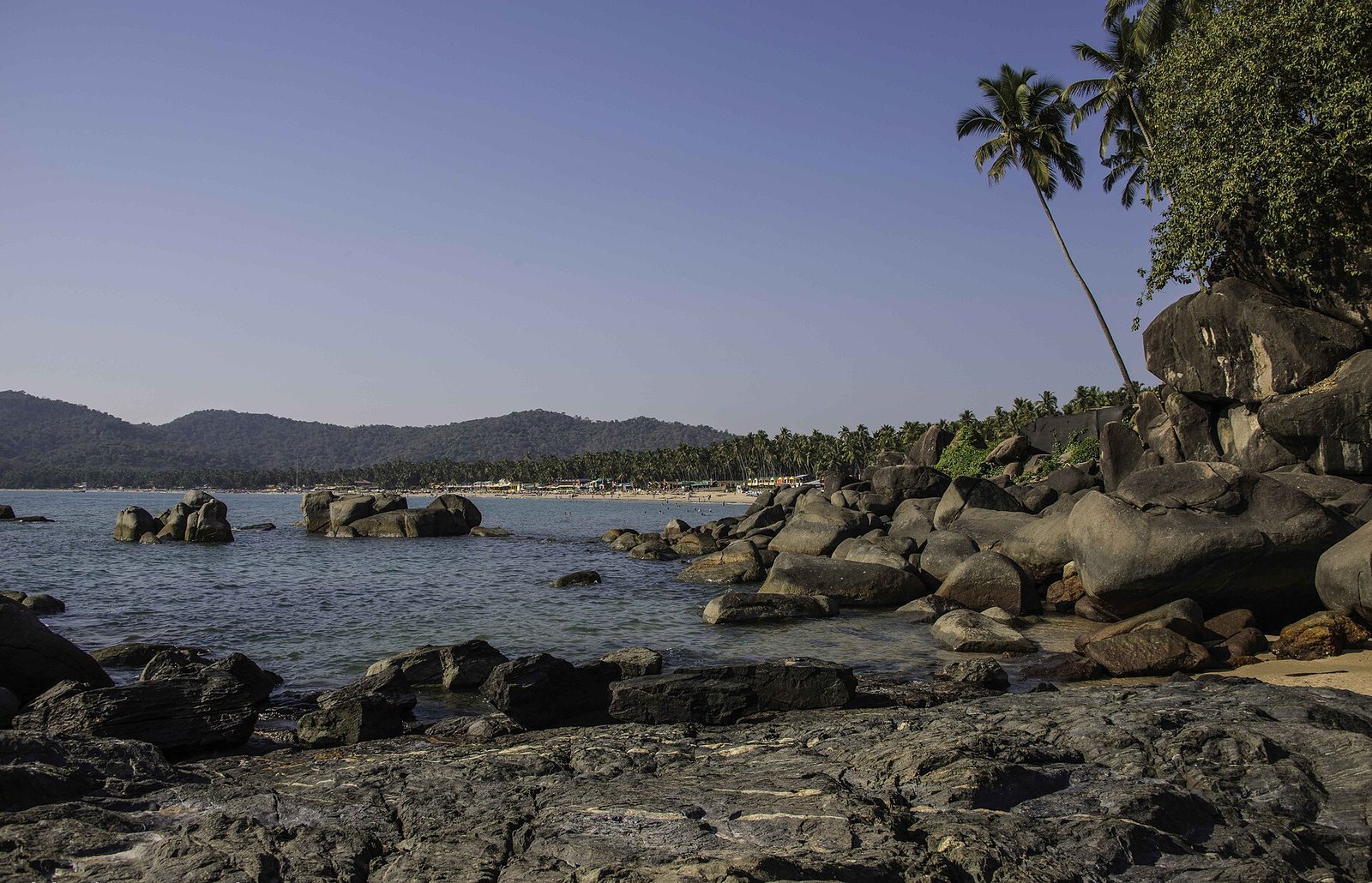
Goa's weather, sea, crowds and festivals month by month, built on official climate averages for Panaji, with what each season means from Calangute.
Go between November and March for dry beach weather; December to February have the coolest nights. April and May are the hottest months, and the June-to-September monsoon, wettest in July, closes the sea to swimming.
For dry weather and an open sea, come between November and March. There is almost no rain from December to March, the coolest nights fall between December and February, and lifeguards mark safe swimming areas on the beaches with flags. April and May are the hottest months, and from June to September the monsoon brings heavy rain, red-flagged beaches and a ban on sea swimming.
If you can pick only one month, February is the safest bet: it averages just 0.1 mm of rain, nights are still cool at about 21°C, and Carnival often falls in February, though its date moves with Easter. March is just as dry and, going by Goa Tourism's 2025 figures, quieter than January or February, though its nights are a couple of degrees warmer.
The figures below are the India Meteorological Department (IMD) averages for 1981 to 2010 at its Panaji station; Panaji is 13 km from the resort. They cover rainfall, the average number of rainy days, daytime highs and night-time lows. Calangute, on the same coast, follows the same seasons, so read them as the odds rather than a forecast.
These are Goa's most settled months. Daytime highs stay around 32 to 33°C, but nights drop to about 20 or 21°C. The sea is open for swimming between the red-and-yellow flags; Drishti, Goa's beach lifesaving agency, asks swimmers to keep out of red-flagged water, never to swim alone or after drinking, and to watch children closely. It is also good birdwatching weather: India's official tourism site gives October to March as the best months for the Dr Salim Ali Bird Sanctuary on Chorão island.
December is the festive peak. The Feast of St Francis Xavier on 3 December, Goa Liberation Day on 19 December and Christmas Day are all Goa public holidays, and Christmas to New Year is one of the state's most sought-after holiday periods. If you are staying with us then, note that Ocean Palms Goa bookings for 21 December to 3 January are non-refundable and can't be changed; Calangute at Christmas and New Year covers the crowds, traffic and planning.
January has the coolest nights of the year and was Goa's busiest month in the first half of 2025. Carnival is held just before Lent, so its dates move with Easter: in 2026 its float parades ran from 13 to 17 February in Porvorim, Panaji, Margao, Vasco, Mapusa and Morjim. Goa Tourism lists Carnival for February 2027 with dates still tentative, so check the Goa Carnival guide nearer the time.
March stays almost rainless, and it is Shigmo season. Goa's Hindu spring festival falls in the month of Phalguna, typically March, and its float parades and folk troupes tour the towns: in 2026 they visited 19 centres between 5 and 18 March, reaching Calangute on 6 March. Goa Tourism lists Shigmo for March 2027, dates tentative, so watch for the centre-wise schedule.
April and May are the hottest months. Highs only edge up to about 33 or 34°C, but nights stay around 25 to 26°C, so plan beach time for early morning and late afternoon and keep the middle of the day for shade and the pool. May also brings the first pre-monsoon showers, and the monsoon can come early: in 2025 it reached Goa on 25 May, 12 days ahead of its usual 5 June.
Goa Tourism's tentative calendar has a Heritage Festival in nearby Saligao and the Spirit of Goa Festival at Colva in April 2027. For handling the heat, especially with children, see Goa in April and May.
The southwest monsoon normally reaches Goa around 5 June, and in 2026 it arrived on exactly that date. June and July are the wettest months, with about 892 mm and 907 mm on average, and rain falls on most days through July and August before September eases to about 260 mm. Days are cooler, with highs of about 29 to 31°C.
The sea is the big change. Sea swimming and coastal water sports are prohibited through the monsoon, red flags go up along the beaches, and Drishti asks people not to enter the water at all, even at the shoreline. Mechanised fishing boats are also kept off the water for two months (1 June to 31 July in 2026), though non-mechanised canoes may still go out, weather permitting.
In return you get a greener, quieter Goa and its own festivals: Sao Joao on 24 June, when young men in flower crowns called kopels welcome the monsoon (Goa Tourism's state celebration is at Siolim), and Chovoth, or Ganesh Chaturthi, whose date moves each year and fell on 14 September in 2026. Goa in the monsoon weighs up who will enjoy it, and who won't.
On IMD's calendar the monsoon season ends on 30 September, but October still averages about 146 mm of rain over six or seven days, with highs back near 32°C. November is mostly dry, with about 27 mm on around two days, and in 2026 it brings two big dates: Narakasur effigies are burnt before dawn on 8 November, Diwali morning, and the 57th International Film Festival of India runs in Panaji from 20 to 28 November.
Goa Tourism's monthly arrival figures for the first half of 2025 give a rough picture, though they cover the whole state rather than Calangute alone. January was the busiest of those months, with 10.56 lakh visitors, nearly 70,000 of them from abroad, and May, despite the heat, drew more people than February or March, almost all of them domestic. June, the first full monsoon month, still saw 8.34 lakh visitors, but only about 25,000 from abroad. For quieter weeks with good weather, see the season-by-season guide to when Calangute is least crowded.
Some things don't change with the season at Ocean Palms Goa. The resort is in Gauravaddo, Calangute, about 650 m from the nearest beach along Holiday Street; the outdoor pool is open from 10 AM to 8 PM, with a separate children's pool, and full power backup covers the air-conditioning. On wet or very hot days there is Nautilus, our indoor restaurant overlooking the pool, the Coral Spa (10:30 AM to 7:30 PM) and a games room with table tennis, carrom, foosball and air hockey.
Book early for December and January, especially around Christmas and New Year. Outside the 21 December to 3 January window, bookings can be cancelled free of charge up to 48 hours before check-in, a useful cushion if your dates sit near the edges of the monsoon. Our front desk can also help plan sightseeing to suit the season, from heritage walks to spice plantations.
Occasionally. November averages only about 27 mm, yet IMD's Panaji records show 226.7 mm in November 2021, and the wettest December on record brought 216.3 mm in 1965. From December to March a rainy day is rare rather than impossible.
Enough to keep plans flexible. IMD's state-wide figures show the 2026 monsoon delivered 2,055.4 mm between 1 June and 30 September, 31.7% below the normal of 3,007.8 mm, while the 2025 monsoon arrived 12 days early. Check IMD's Goa forecasts in the days before you travel rather than relying on averages alone.
Not usually. Under Goa's shack policy, licensed beach shacks normally close on 31 May, though in 2026 they were allowed to stay open until 10 June, weather permitting. Permissions for the new season are renewed by mid-August so that operators can be ready before 1 September.
From November to February, light cotton clothes, swimwear and a thin layer for cooler evenings and air-conditioned rooms. In April and May add a sun hat, high-factor sunscreen and a refillable water bottle; for the monsoon, pack a compact umbrella or rain jacket, quick-drying clothes and sandals with a good grip.
Photo: Rock formation, Palolem Beach by Mahabalaindia, CC BY-SA 4.0, via Wikimedia Commons.
Questions about any of this — or a stay to plan around it? Our team replies within a day.
What Goa's Narakasur night is, when the effigies burn in 2026, where to see them from Calangute, and how to watch safely after dark.
Read the guide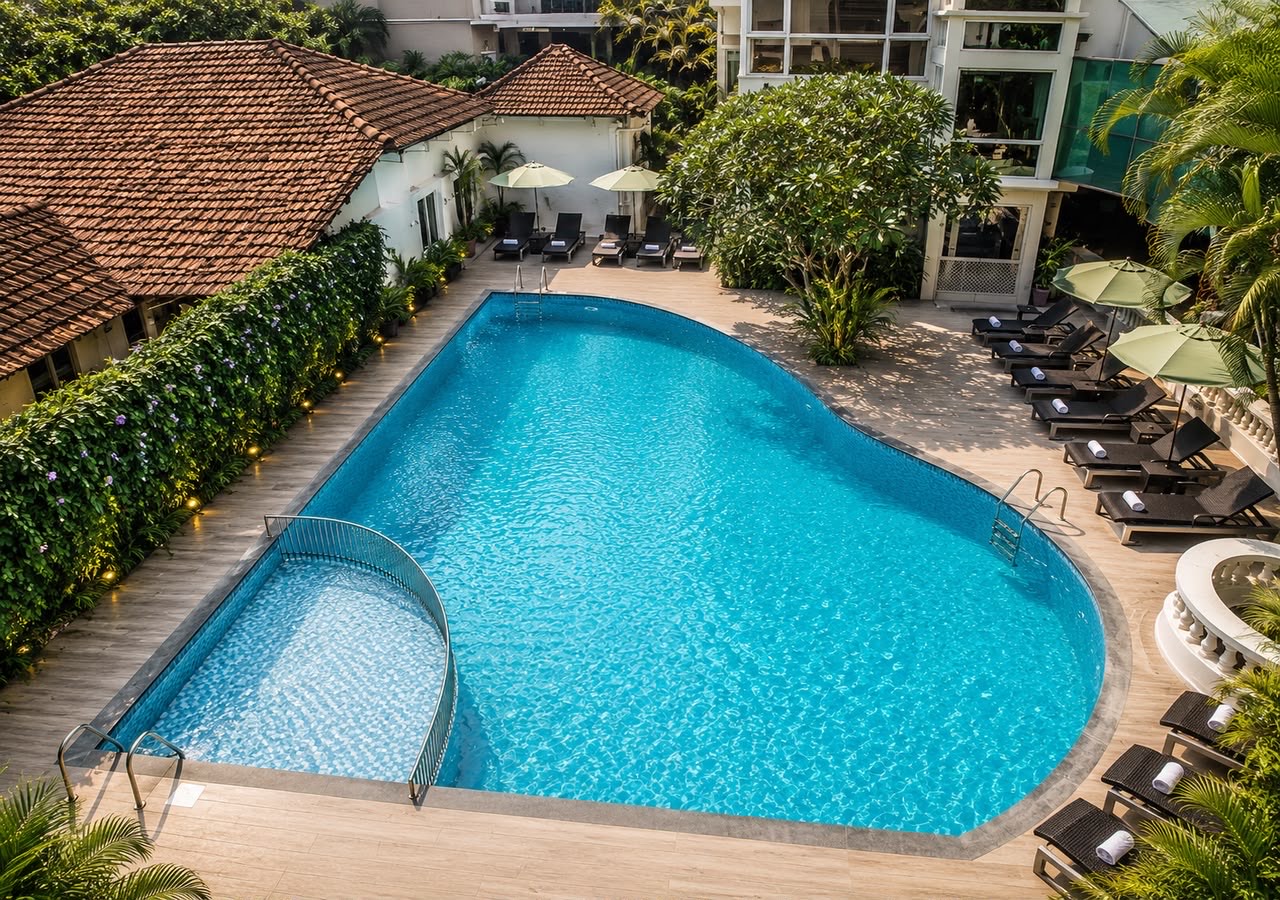
How to take North Goa's busiest beach at your own pace — mornings on the sand, lazy afternoons, and where the lanes lead after dark.
Read the guide
Two days, two moods — one for the coast and its colour, one for the churches, temples and old lanes that made Goa, Goa.
Read the guide