48 hours in North Goa
Two days, two moods — one for the coast and its colour, one for the churches, temples and old lanes that made Goa, Goa.
Read the guide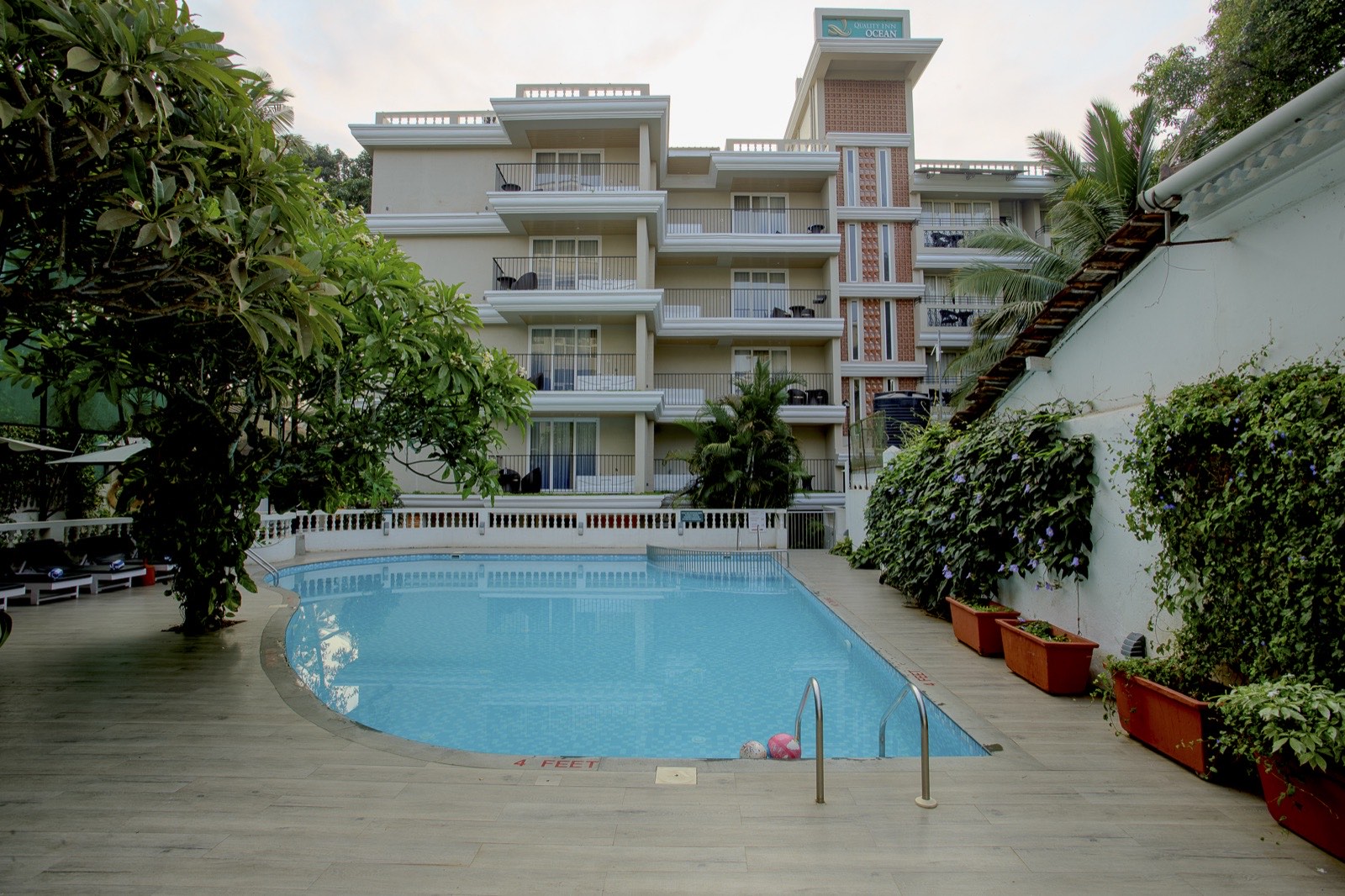
How to take North Goa's busiest beach at your own pace — mornings on the sand, lazy afternoons, and where the lanes lead after dark.
Calangute wears two faces. By day it is North Goa's most famous stretch of sand — broad, golden and busy with the happy commerce of shacks, sun-beds and water sports. By night the beach empties, the lanes light up, and the village behind it becomes one long, unhurried promenade of restaurants, bars and street stalls.
Ocean Palms sits in Gauravaddo, a quieter pocket just off the main Calangute road, which means you can dip in and out of the bustle as it suits you. A few minutes' walk one way is the beach; the other way, peaceful village lanes and coconut palms.
The kindest hours on Calangute Beach are before eleven. The sand is cool, the light is soft, fishing boats sit beached above the tide line, and the sea is at its calmest for a swim. Walk north and the crowds thin with every step — keep going and the sands run, more or less unbroken, toward Baga.
Lifeguards patrol marked swimming zones through the day. The sea here deserves respect, especially around the monsoon months, so swim where the flags say and you will be looked after.
Between noon and four the beach belongs to the sun. This is the hour to do as Goans do — retreat. A long lunch in a beach shack under a palm roof, a book on your balcony, a treatment at the Coral Spa, or simply the pool and something cold from the bar.
Calangute's sunset is a daily event: the whole beach turns to face the Arabian Sea, and for twenty minutes everything glows. After dark, the energy moves inland. The Calangute–Baga strip is an easy amble of restaurants, dessert counters and shops that stay open late; the famous nightlife of Tito's Lane in neighbouring Baga is a short ride away.
Street shopping is part of the fun — cottons, silver, cashews, and the inevitable pushback and counter-offer. Bargain with a smile; it is expected, and it is a sport.
November to February is the classic season — dry, sunny and rarely too hot, with every shack and stage in full swing. October and March are quieter shoulder months with the same blue skies. June to September is the monsoon: dramatic skies, green fields, empty sands and the best room rates of the year — a different Goa, loved by those who know it.
Carry small notes for shacks and stalls, keep an eye on the midday sun, and book dinner ahead in peak season. Scooters and bikes can be hired close to the resort if you want to wander further — our team will point you to the reliable operators, and to whatever else your kind of holiday needs.
Questions about any of this — or a stay to plan around it? Our team replies within a day.
Two days, two moods — one for the coast and its colour, one for the churches, temples and old lanes that made Goa, Goa.
Read the guide
Forts, beaches, basilicas and two very Goan festivals — what's within reach of the resort, and how far each one is.
Read the guide