
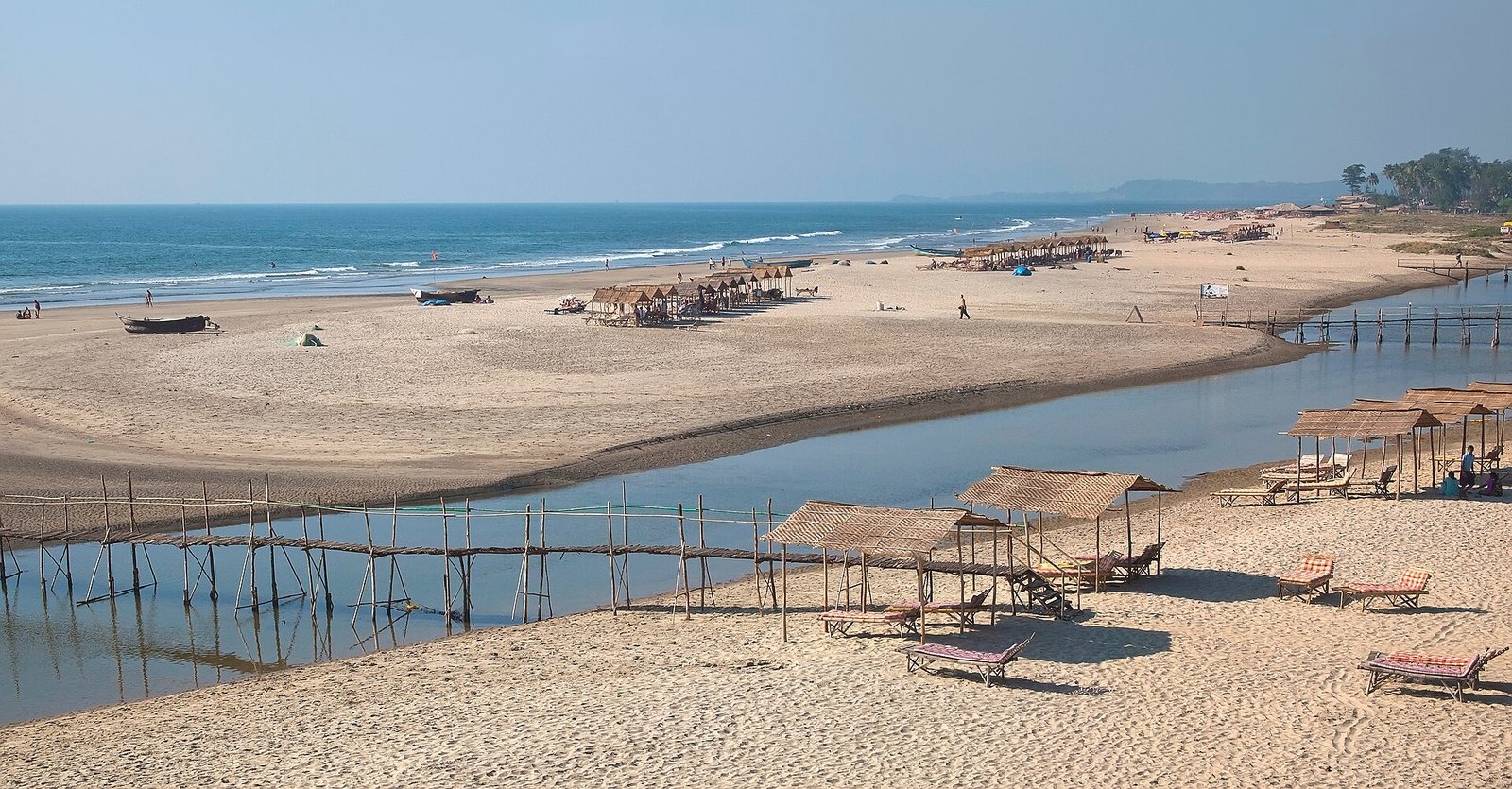
Sinquerim to Querim: a beach-by-beach guide to North Goa
Twelve North Goa beaches from Fort Aguada to the Tiracol river: what each is like, who it suits, how far it is from Calangute and what to watch for.
Read the guide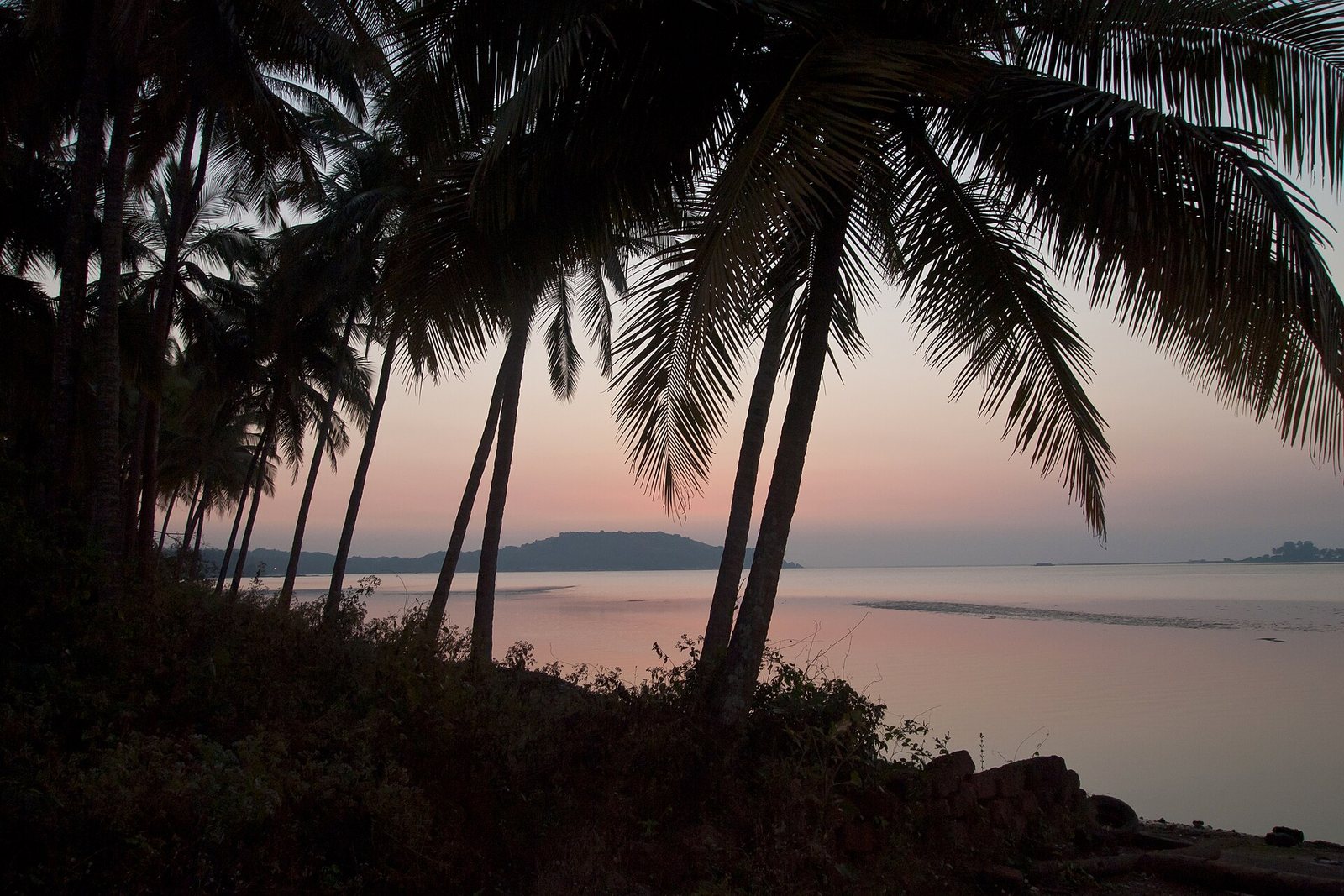
Where to watch the sun go down, from the beach near Calangute to Chapora Fort and Arambol, with sunset times for every month and dusk safety tips.
North Goa's coast faces west, so any open beach works: Calangute and Candolim close by, Vagator below Chapora Fort or Arambol further north. Sunset is about 6 pm in November and December and nearer 7 pm by May.
North Goa's coast faces west over the Arabian Sea, so the sun sets into the water from almost any open beach between Sinquerim and Arambol. What changes from one place to the next is the frame: a fort on a headland, a creek mouth, dark rocks, or a long, plain line of sand.
Timing matters as much as the spot. Sunset here never comes earlier than about 6:01 pm or later than about 7:10 pm, and the light goes quickly once the sun has dropped, so arrive early and know how you are getting back.
The times below are for Calangute in Indian Standard Time, rounded to the minute, calculated with sunrise-sunset.org's data. Panaji's are within a minute of these, and the figures barely change from one year to the next. The sun sets earliest in the second half of November and latest in the first half of July.
Civil twilight, when there is still enough natural light to see by, lasts only 21 to 24 minutes after sunset at this latitude. Aim to be on the sand 30 to 45 minutes before the listed time, and keep a torch handy for the walk back. The setting point moves along the horizon too: in December the sun goes down about 24 degrees south of due west and in June about as far north of it, which matters if you want a fort or headland in the frame.
From Ocean Palms Goa, the nearest beach is about 650 m away, a walk down Holiday Street, which makes it the easy choice: no taxi, no parking, and you are back in time for dinner. It is part of one unbroken run of firm sand that stretches from Sinquerim north through Candolim and Calangute to Baga. Our page on the resort's location and distances has the details.
Incredible India counts Calangute among the most popular beaches in the country, so expect company on the main stretch, about 2.5 km from us. For a different frame, walk south towards Candolim, where the Aguada headland closes the view, or north to Baga, about 4.5 km from us, where Baga Creek meets the sea at the northern end of the beach. Our guide to walking the beach from Calangute to Baga or Candolim covers the distances and the way back.
At the southern end of the strand, the Portuguese built Fort Aguada in 1612 on the headland above Sinquerim, and its old lighthouse dates from 1864. The walls give long views over the sea. Incredible India lists the fort as open from 9 am to 5 pm, well before sunset in any month; other listings differ, so check on the day, but do not plan to watch the sun set from the ramparts.
Instead, walk the walls in the afternoon, then head down to Sinquerim beach below the headland for the sunset itself. From there the sand runs north all the way to Baga, so you can watch, then stroll. Our comparison of the Aguada, Chapora and Reis Magos forts explains what you will see inside each.
Further north, the red laterite Chapora Fort stands on the hill at the northern tip of Big Vagator beach, above the Chapora river. Many visitors know it from the film Dil Chahta Hai. From the walls you look out over the sea and north across the river to Morjim.
Visiting hours for Chapora are not clearly published, and restoration work on the fort has been delayed for years, so access may change: check locally on the day. The ground up there is rough, so if you watch from the walls, start down as soon as the sun has gone rather than waiting for the afterglow, because twilight lasts little more than 20 minutes. Down on Vagator's sand, keep off the rocks once it gets dark.
Arambol, also called Harmal, lies north of the Chapora river in Pernem and is the furthest spot in this guide. Dark rocks on its pale sand give the sunset a strong foreground. It is also the longest drive on this list, so leave in good time and agree how you will get back before you set off, since the return is in the dark.
Between the river and Arambol lie Morjim, Ashwem and Mandrem, all facing west as well. Olive Ridley turtles nest at Morjim, so keep away from any marked nesting area, as Drishti, the lifesaving agency on Goa's beaches, asks, and keep torches off the sand.
The dry season. At the Panjim weather station, every month from December to April averages 5 mm of rain or less, and November about 21 mm, so rain rarely spoils an evening. October still averages about 160 mm, and June to September bring about nine-tenths of the year's rain, so expect many monsoon sunsets to be lost behind cloud.
The monsoon changes the beach as well. Swimming in the sea and coastal water sports are prohibited for the season, red flags mark stretches where entering the water is unsafe, and Drishti warns against going in even near the shore, as strong currents and waves can pull people into deeper water quickly. It also warns that rocky stretches, cliffs and raised ground by the sea turn slippery in the rain, so on a monsoon evening, watch from well back on the sand.
Sunset ends the swimming day. Drishti's lifesavers watch the water from 7 am until sunset, and its guidelines, which Goa Tourism posted online in June 2026, list beaches as open from 7 am till sunset and closed for swimming from sunset until 7 am the next morning. Do not go in after the sun has set, even for a paddle, and keep children close.
The same guidelines tell visitors to avoid rocky areas, which are exposed to breaking surf and dangerous for walkers. Drinking alcohol and smoking are prohibited on all beaches, an offence punishable with a fine, jail or both. Nobody who has had a drink should drive or ride back; take a taxi. For daytime swimming, our guide to the flags and swim zones at Calangute and Baga explains the rules.
From the nearest beach it is a short walk back up Holiday Street. The Terra, our poolside restaurant and bar, is open until 10:30 pm, with live bands, DJs and shows from Thursday to Sunday, 7:30 to 10 pm. Even at the year's latest sunset, about 7:10 pm in early July, there is time to watch it go and walk back before the music starts.
For Chapora, Vagator or Arambol, our front desk can arrange a car with a driver, so nobody in your group has to drive back in the dark. Tell the team which spot you have in mind, and they can help you plan when to leave.
We would not promise it: most rooms look over the village, the Pool View Rooms with Jacuzzi look over the pool, and only the Sky Villa has a partial sea view. For the sun going into the water, walk down Holiday Street to the nearest beach, about 650 m away.
No. Goa's coast faces west, so the sun comes up inland, behind you as you face the water. In Calangute it rises between about 6:03 am in early June and about 7:05 am in the second half of January.
India keeps a single time zone, and Goa lies west of both cities and well south of Delhi, where winter days are shorter. In mid-December the sun sets in Calangute at about 6:06 pm, against about 5:26 pm in Delhi and 4:54 pm in Kolkata, though by mid-June Delhi's sunset, at about 7:20 pm, is the later one.
The nearest option is a river cruise on the Mandovi at Panaji, about 13 km from us: cruises leave from the Santa Monica jetty near the Mandovi bridge, including the hour-long Goa Tourism cruises with Goan folk songs and dances. Whether a departure catches the sunset depends on the day's timetable, so read our guide to Mandovi river cruises and check times before you book.
Keep to busy, lit streets rather than the water's edge, walk in company and use your phone torch; if in doubt, take a taxi. In an emergency anywhere in India, dial 112.
Photo: Romantic Vagator-Chapora Bay after sunset, Goa, India by Vyacheslav Argenberg, CC BY 4.0, via Wikimedia Commons.
Questions about any of this — or a stay to plan around it? Our team replies within a day.
Twelve North Goa beaches from Fort Aguada to the Tiracol river: what each is like, who it suits, how far it is from Calangute and what to watch for.
Read the guide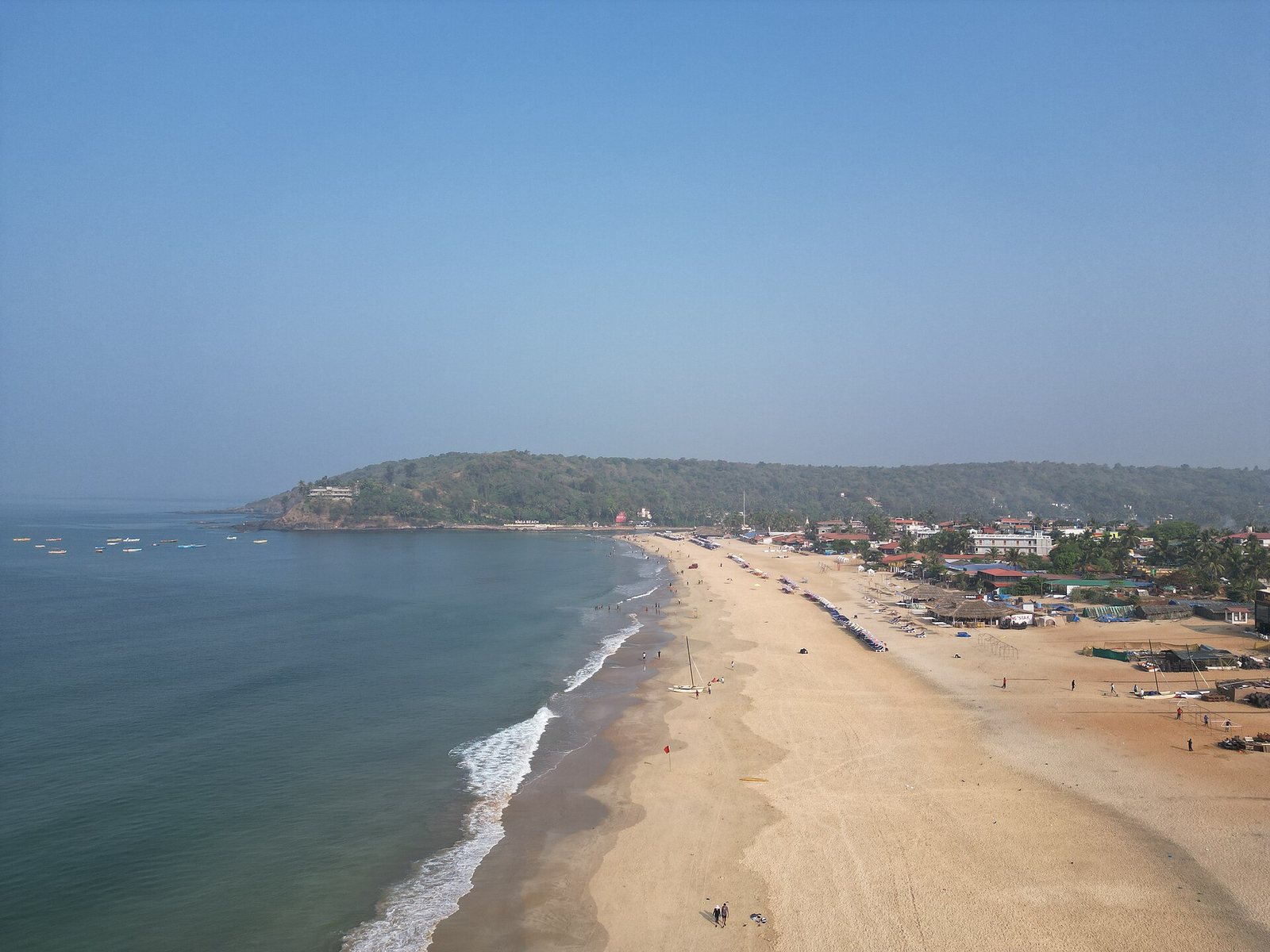
What Goa's red, red-and-yellow and chequered beach flags mean, when lifesavers are on duty, and how to swim safely at Calangute and Baga.
Read the guide
Opening hours for the Basilica of Bom Jesus and Sé Cathedral, the Sunday and Friday catches, what to wear, and where St Francis Xavier's relics rest.
Read the guide