
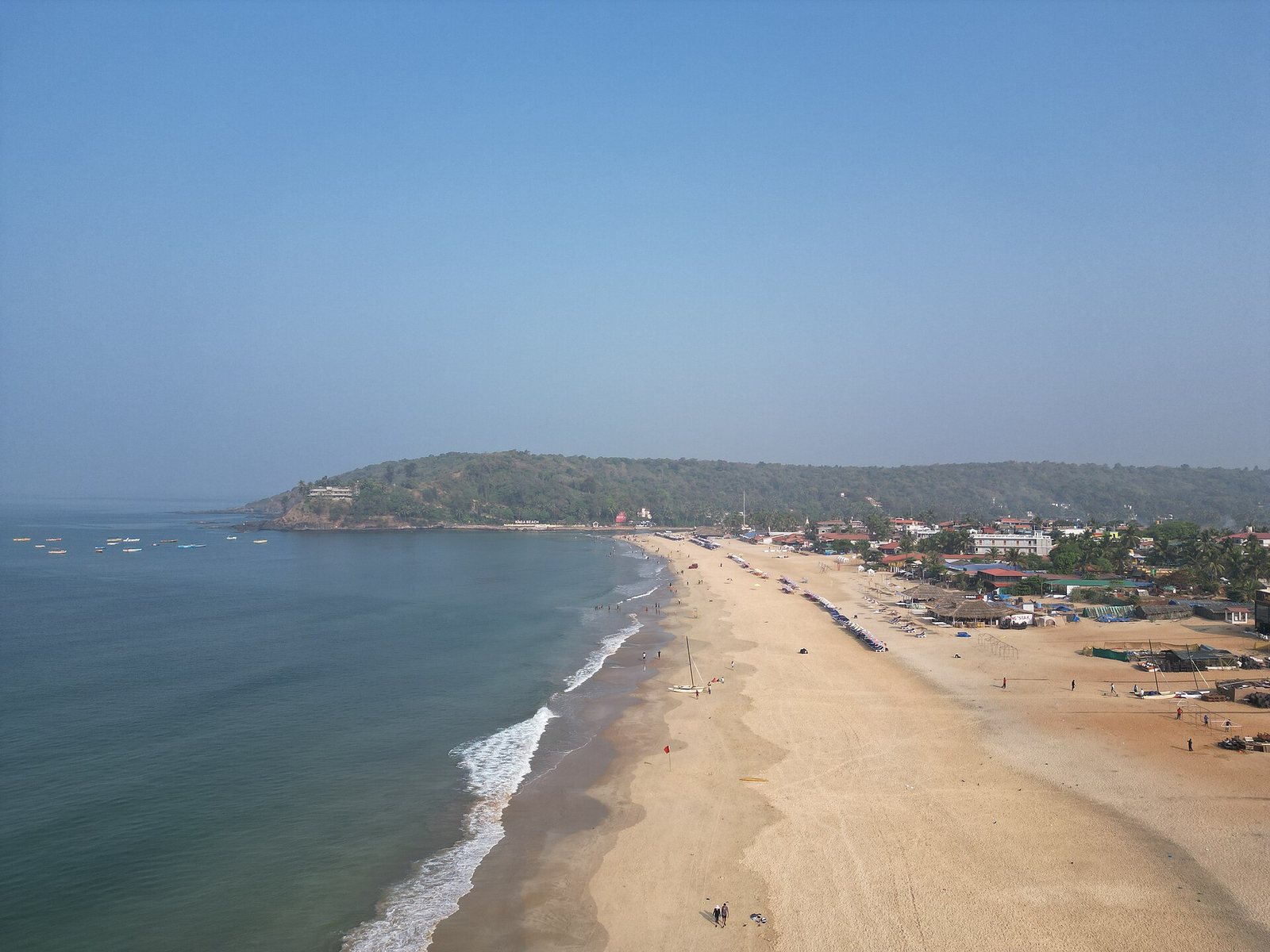
Is it safe to swim at Calangute and Baga? Flags, zones, lifeguards
What Goa's red, red-and-yellow and chequered beach flags mean, when lifesavers are on duty, and how to swim safely at Calangute and Baga.
Read the guide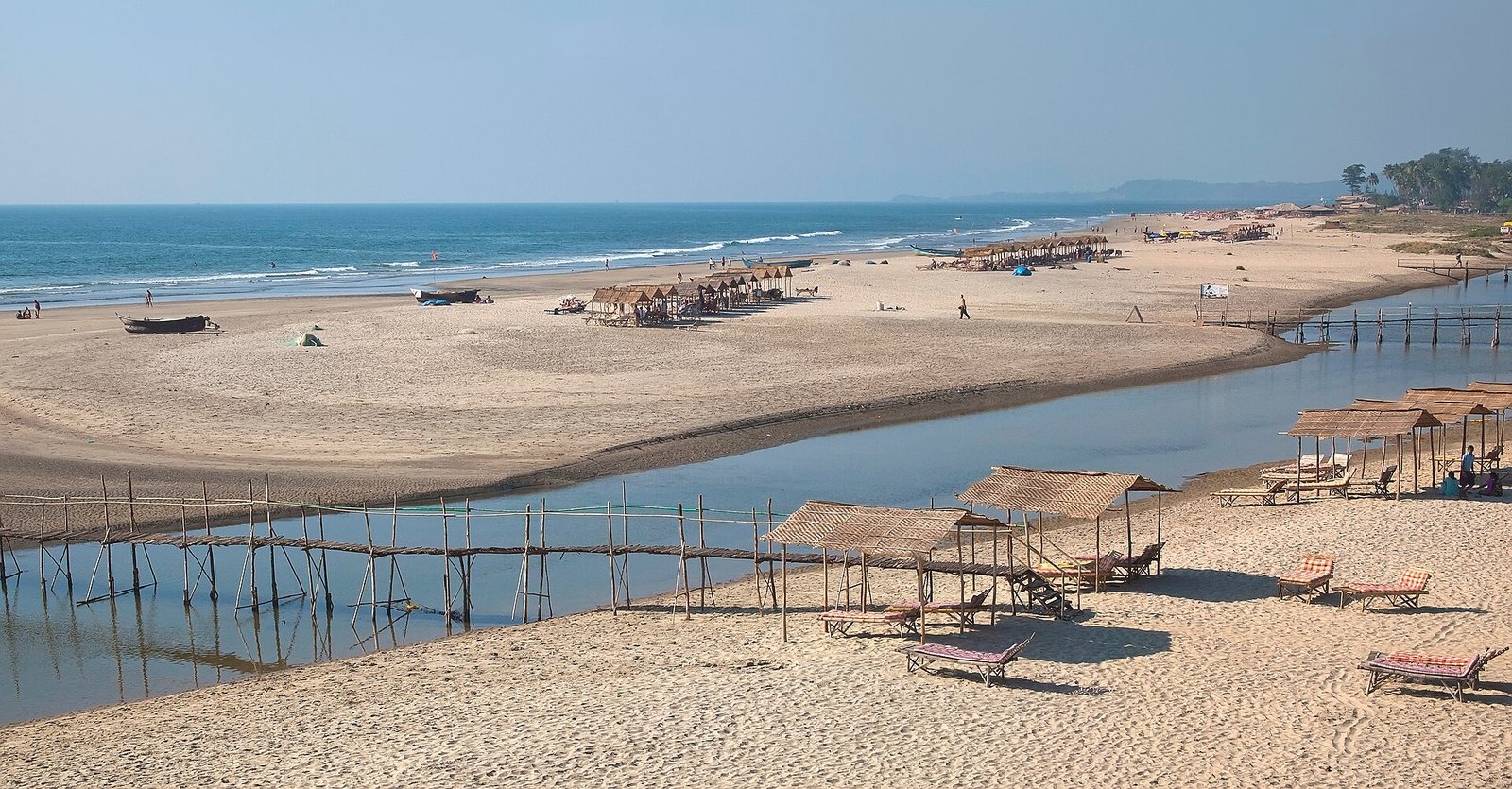
Twelve North Goa beaches from Fort Aguada to the Tiracol river: what each is like, who it suits, how far it is from Calangute and what to watch for.
Sinquerim, Candolim, Calangute and Baga form one unbroken strand, busiest at Calangute and Baga. Anjuna, Ozran and Vagator are rockier, with cliffs and coves. Across the Chapora, Morjim to Querim are quieter; Morjim and Mandrem are protected turtle-nesting beaches.
North Goa's coast changes character as it runs north from Fort Aguada to the Tiracol river. Sinquerim, Candolim, Calangute and Baga form one unbroken beach. Beyond the creek at Baga come the rocks, cliffs and coves of Anjuna, Ozran and Vagator. Across the Chapora river, Morjim, Ashwem, Mandrem, Arambol and Querim are quieter, and two of them, Morjim and Mandrem, are protected turtle-nesting beaches.
This guide walks the coast in that order: what each beach is like, who it suits and what to watch for. Distances are approximate road distances from Ocean Palms Goa in Gauravaddo, Calangute, which is about 650 m from the nearest stretch of sand.
Sinquerim, about 4 km by road, lies below Fort Aguada, which the Portuguese built in 1612. From here the sand runs without a break north to Baga, so this is the natural start of a long beach walk; our guide to walking the beach from Calangute covers timing and the tricky stretches. Dolphin-watching boats leave from the busy Sinquerim–Candolim jetty. Researchers have found that crowding and chasing boats stress the dolphins, so choose a trip that keeps its distance.
Candolim, 2 to 3 km away, carries the same strand north until it merges into Calangute. Parasailing and other water sports run here in season, and the open sand suits walkers and runners early in the day. Pair either beach with a morning visit to the fort.
The main Calangute beach, about 2.5 km from us, is one of Goa's most popular: a sweep of sand about 7 km long, known as the Queen of Beaches. Expect crowds, shacks and water sports, and go early on a weekday if you want space. Lifesavers warn that rip currents can be dangerous even when the water looks calm, so swim only inside a flagged swim zone. The zones here are split into family, men's and women's sections.
Baga, about 4.5 km away, is the strand's northern end, with water sports by day and restaurants and shacks busy into the evening. At its far end the Baga creek meets the sea and closes off the strand; beyond it, the coast turns rocky. Buy any boat ride or water sport only at an authorised counter, never from a tout, and keep the life jacket on.
Anjuna, about 9 km away, is a different kind of shore: black rock juts out into the sea around a cove of pale sand. On Wednesdays in season the flea market near the beach draws big crowds, so pick another day if it is the beach you are after.
Vagator, about 10 km away, is a curved bay below the hill topped by Chapora Fort, backed by cliffs. The main beach is usually crowded; Ozran is the smaller cove beside it. Come for the views and the late-afternoon light. If you swim, stay inside the flags, keep off damp rocks that take breaking surf, and treat the cliff paths with care, especially after rain.
Morjim, about 18 km by road over the river bridge at Siolim, lies on the northern bank of the Chapora's mouth. India's official tourism site calls it one of North Goa's most tranquil beaches, good for a slow afternoon and a long walk. Morjim and Mandrem have been declared sensitive zones for sea turtle conservation, and Olive Ridleys nest here mainly from November to February. Keep well away from fenced nests and keep torches off the sand at night, because light and noise can drive a turtle back to sea before she lays. Our guide to the Olive Ridley turtles explains how to visit responsibly.
Ashwem, about 20 km away, has largely escaped the mainstream crowds and is known for yoga and fresh seafood. The water often looks calm, but the same official site warns of dangerous underwater currents. Morjim and Ashwem were among the beaches given marked swim zones in 2025, so look for the flags and stay between them.
Mandrem, about 21 km away, is known for its calm: a beach for solitude, yoga and sunsets, where a small creek meets the sea. Look out for herons and kingfishers, and give nesting turtles the same room as at Morjim.
Arambol, about 24 km away, has a long-standing yoga and meditation scene, and it also gained marked swim zones in 2025. You walk down from the village lanes to the sand, where black rocks frame the sunset. The next beach along ends at the Sweet Water Lagoon, a freshwater lake just behind the sand.
Querim, also called Keri, about 31 km away, sits at Goa's northern tip where the Tiracol river meets the sea, with Fort Tiracol on the far bank. Few visitors come this far, which is the point. Swim only where you can see lifesavers' flags, and stay well clear of the river mouth.
You don't need to see all twelve. Choose by the day you want, and treat the far north as a half-day or full-day outing rather than a quick dip.
Drishti, Goa's beach lifesaving agency, has lifesavers on duty from 7 AM to sunset. Swim only in zones marked by dual red-and-yellow flags and never where a red flag flies; black-and-white chequered flags mark water-sports areas, not swimming. The beaches are closed for swimming from sunset to 7 AM, and no one should go into the sea after drinking any alcohol. Keep off damp rocky outcrops and never jump or dive from rocks into the water.
More than 100 swim zones have now been set up along Goa's coast, and the network keeps changing, so look for the flags on the day rather than relying on an old map. If you can't see any, don't swim. In the monsoon, roughly June to September, swimming in the sea and coastal water sports are prohibited, red flags line the beaches and Drishti warns that even shallow water is unsafe. Our guide to swimming safely at Calangute and Baga covers rip currents, children and what to do in an emergency.
The southern strand is easy on foot: the nearest sand is about 650 m from the resort down Holiday Street, past cafés and shops, and from there you can follow the beach towards Baga or Sinquerim. Anjuna and Vagator are a short drive beyond Baga. For Morjim and everything north, the road crosses the Chapora at Siolim. A good far-north day starts early at Querim or Arambol and works south, ending at Morjim for sunset.
Our front desk can arrange scooters, motorcycles, self-drive cars or a chauffeur-driven car, and help plan the route; beach towels are available too. Driving onto the sand is an offence, so park on the approach road and walk the last stretch, and never drink and drive. For our address and distances to Panaji and both airports, see how to find Ocean Palms Goa.
Yes. There are no private beaches in India. A hotel can keep you out of its grounds, but not off the public sand in front of it.
Several go by two names or spellings, and maps and road signs may use either. Arambol is also Harmal, Querim is also Keri, Ashwem is often written Ashvem, and the Tiracol river and fort are also spelt Terekhol.
No. Drinking alcohol on Goa's beaches and in other public places is an offence that can bring a fine. You can still order a drink at licensed shacks and restaurants.
No. Licensed shacks are seasonal structures that go up after the monsoon, and Goa's shack policy requires them to be taken down by 10 June. Opening dates vary from beach to beach, so expect fewer in the early weeks of the season.
Photo: Mandrem Beach and Mandrem River, Mandrem, Goa, India (edit) by Vyacheslav Argenberg (derivative work: UnpetitproleX), CC BY 4.0, via Wikimedia Commons.
Questions about any of this — or a stay to plan around it? Our team replies within a day.
What Goa's red, red-and-yellow and chequered beach flags mean, when lifesavers are on duty, and how to swim safely at Calangute and Baga.
Read the guide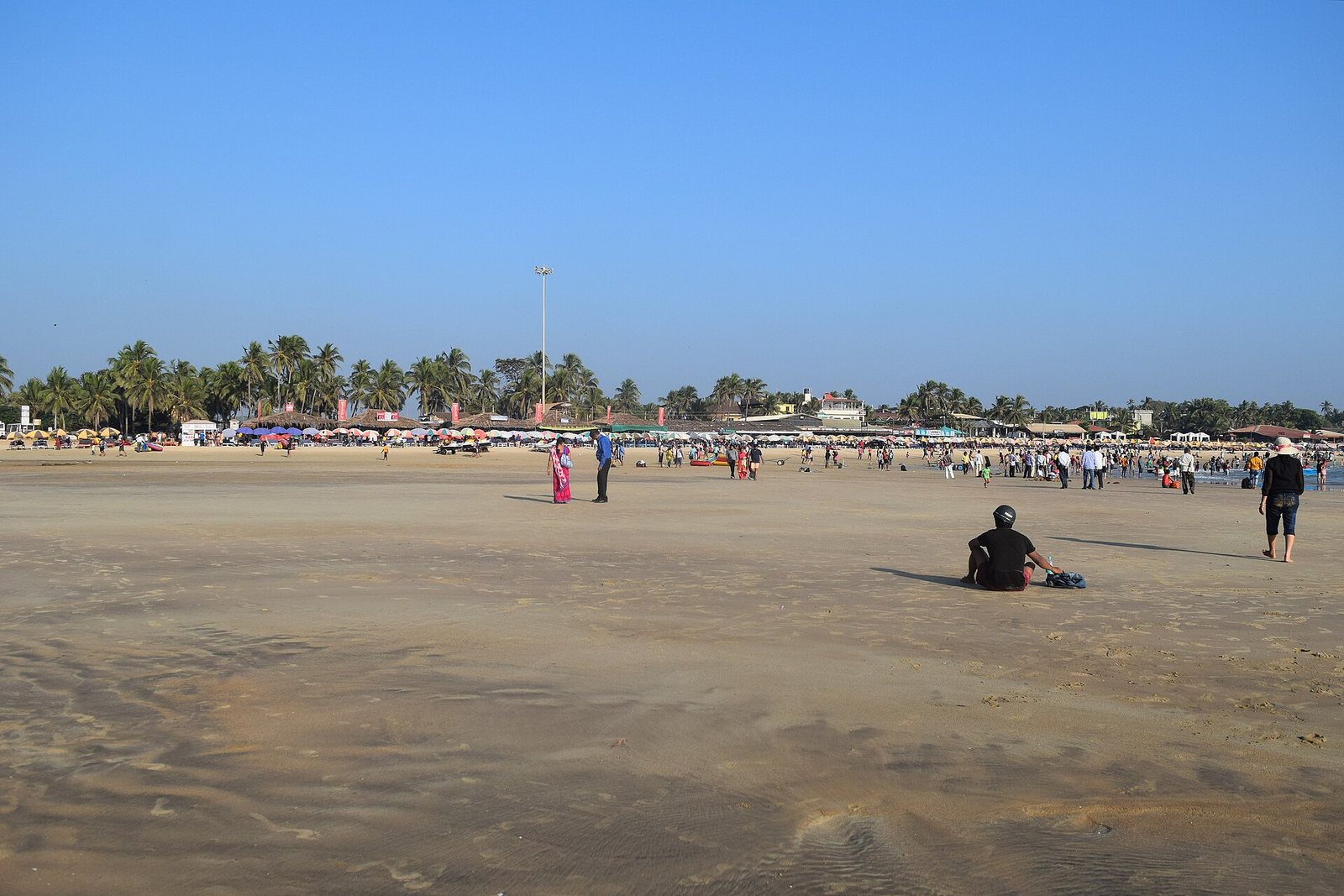
The touts, padded bills and fake bookings that trip up visitors to Calangute and Baga, how to sidestep each one, and who to call if it happens.
Read the guide
What happens at Ocean Palms Goa when you cancel early or late, miss your arrival, move dates or book over Christmas and New Year, and who to contact.
Read the guide