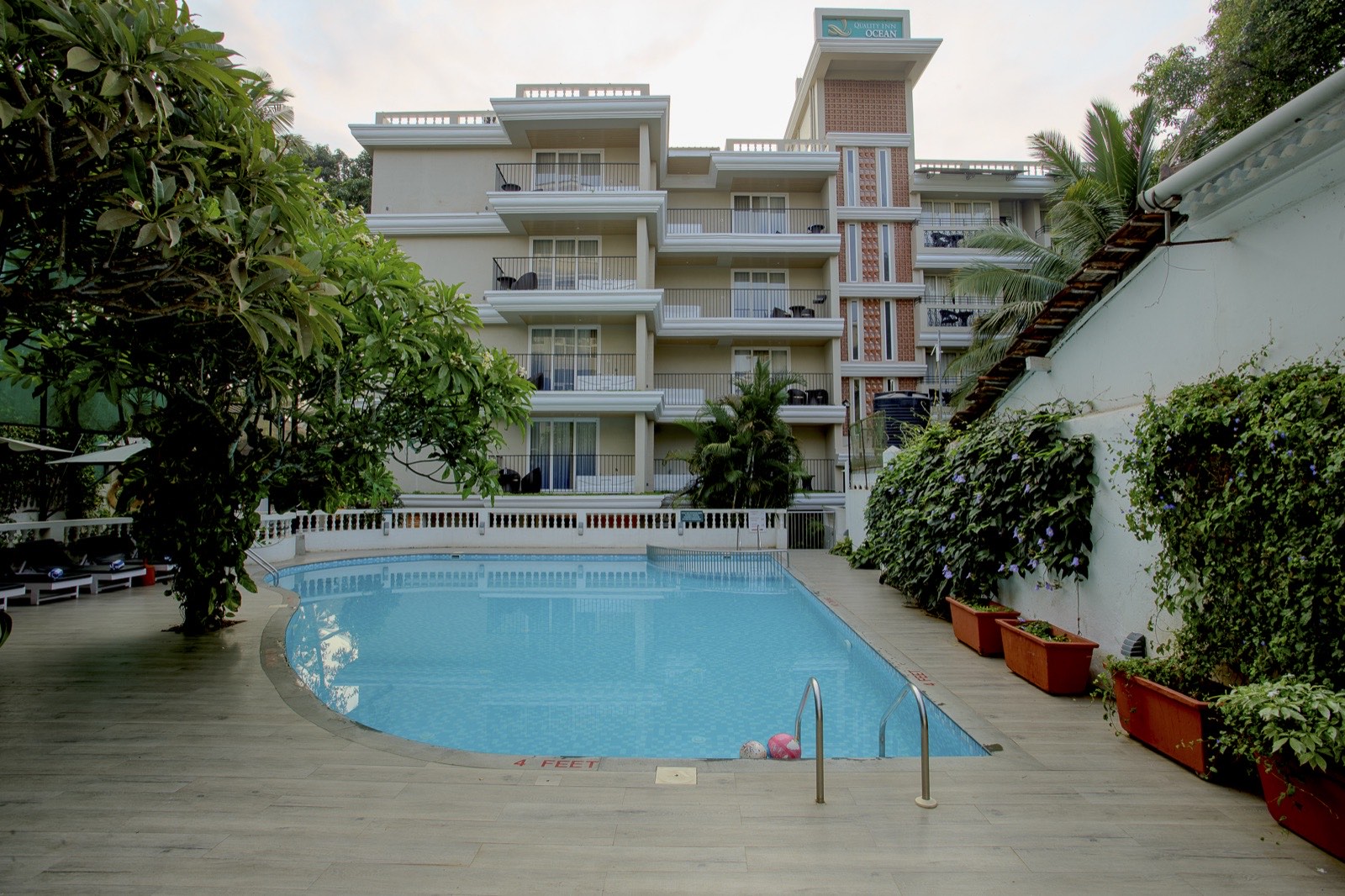
Calangute, gently: a first-timer's guide
How to take North Goa's busiest beach at your own pace — mornings on the sand, lazy afternoons, and where the lanes lead after dark.
Read the guide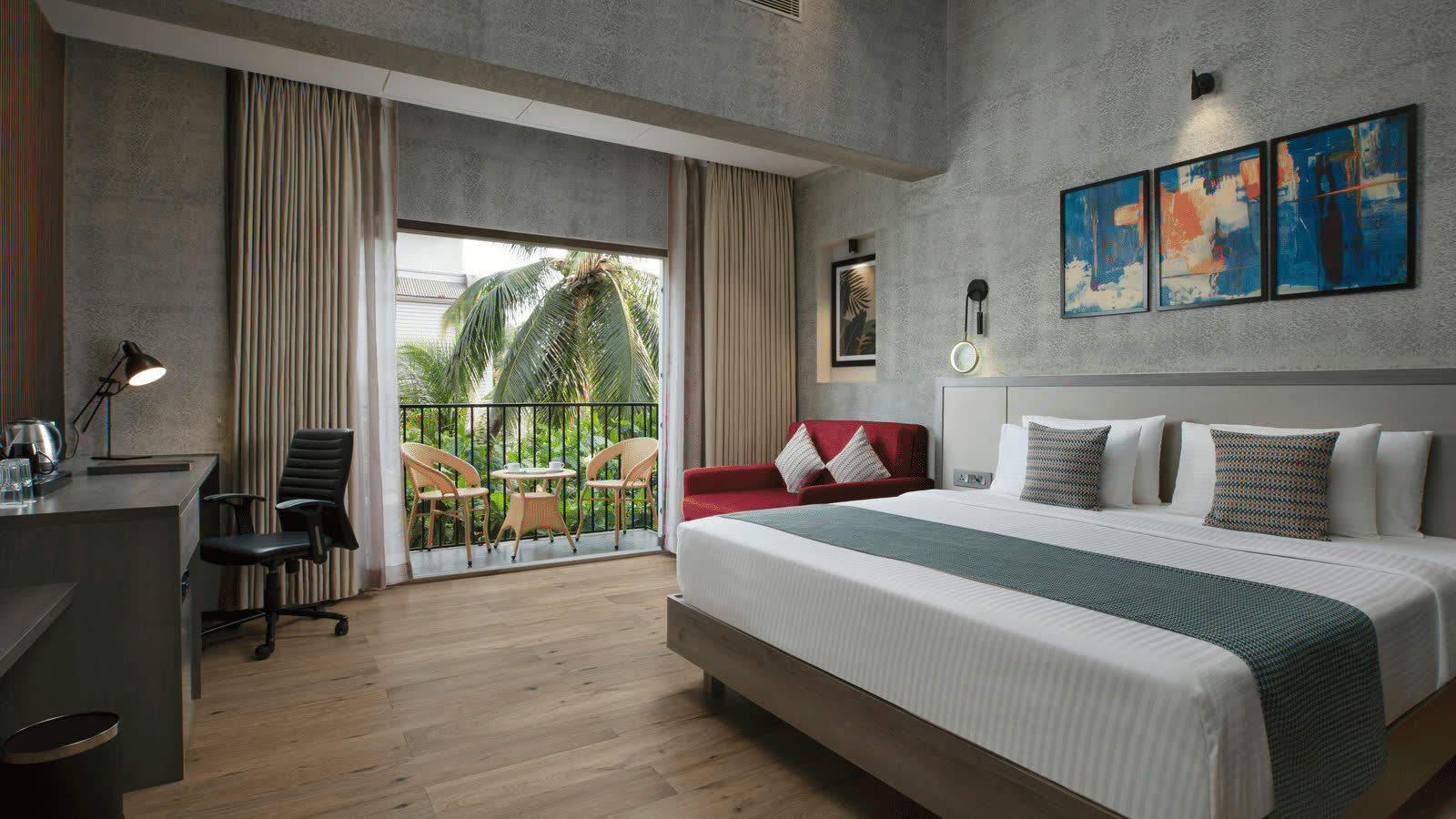
Forts, beaches, basilicas and two very Goan festivals — what's within reach of the resort, and how far each one is.
The Indo-Portuguese fusion you feel everywhere in Goa — in its landscape, its food, its easy temperament — is the residue of a genuinely chequered history. From the fourth century the region was ruled by a succession of Hindu dynasties, including the Kadambas, whose two and a half centuries are remembered as a golden age. Muslim influence arrived with the Bahmani Sultans and the Adil Shahis of Bijapur; then, in 1510, Afonso de Albuquerque took the coast for Portugal, and Goa remained the jewel of that crown until 1961.
All of which is to say: within an hour of your balcony sit five centuries of forts, basilicas and old quarters — plus some of India's best beaches. Here is what's around, with distances from our gate.
Calangute Beach — the nearest stretch is about 650 metres away, a walk down Holiday Street, and the main beach about 2.5 km. The 'Queen of the Beaches' and the truest replica of Goan beach culture: broad sands, shacks, water sports and people-watching without end.
Candolim Beach — 2.1 km. Calangute's quieter, more genteel neighbour, close to Fort Aguada and known for its tranquil air and very good seafood.
Reis Magos Fort — 7.5 km. Built in 1551 to guard the narrowest point of the Mandovi estuary, studded with Portuguese turrets, and once the first lodging for viceroys newly arrived from Lisbon.
Basilica of Bom Jesus, Old Goa — 21.7 km. A UNESCO World Heritage Site and one of the finest pieces of Baroque architecture in India, holding the mortal remains of St. Francis Xavier.
The Museum of Christian Art — about 21 km, in the Convent of Santa Monica at Old Goa, showcasing the richness of Indo-Portuguese Christian art from the wealth of Goa's churches.
Touxeamchem Fest, the Cucumber Feast — at the church of St. Anne at Talaulim, devotees of every faith offer cucumbers to the saint while asking to be blessed with a child; the blessed return with their babies in their arms and gratitude in hand.
The Feast of the Three Kings — at the churches of Reis Magos, Cansaulim and Chandor, local boys in robes, capes and crowns re-enact the journey of the Magi in elaborate pageantry, closing Goa's Christmas season.
Goa's coast runs the full register: parasailing, jet skis, banana boats and windsurfing for the adrenaline-minded; dolphin cruises and canoe rides for everyone else. Most cruise operators leave from the Panjim bank of the Mandovi, running short evening and night cruises out toward the Arabian Sea and back.
For shopping, Panjim's municipal market sprawls inland from the waterfront with fresh produce, dried fish, spices and household wares, and the Friday market at Mapusa draws buyers and vendors from across north and central Goa.
And after dark? The Calangute–Baga stretch houses the premier clubs north of the Mandovi, with live Latino, jazz and retro venues in between. Further north, Anjuna, Vagator and Arambol sway to the beat of a different drum. Our front desk will happily point you — or book the car.
Questions about any of this — or a stay to plan around it? Our team replies within a day.
How to take North Goa's busiest beach at your own pace — mornings on the sand, lazy afternoons, and where the lanes lead after dark.
Read the guide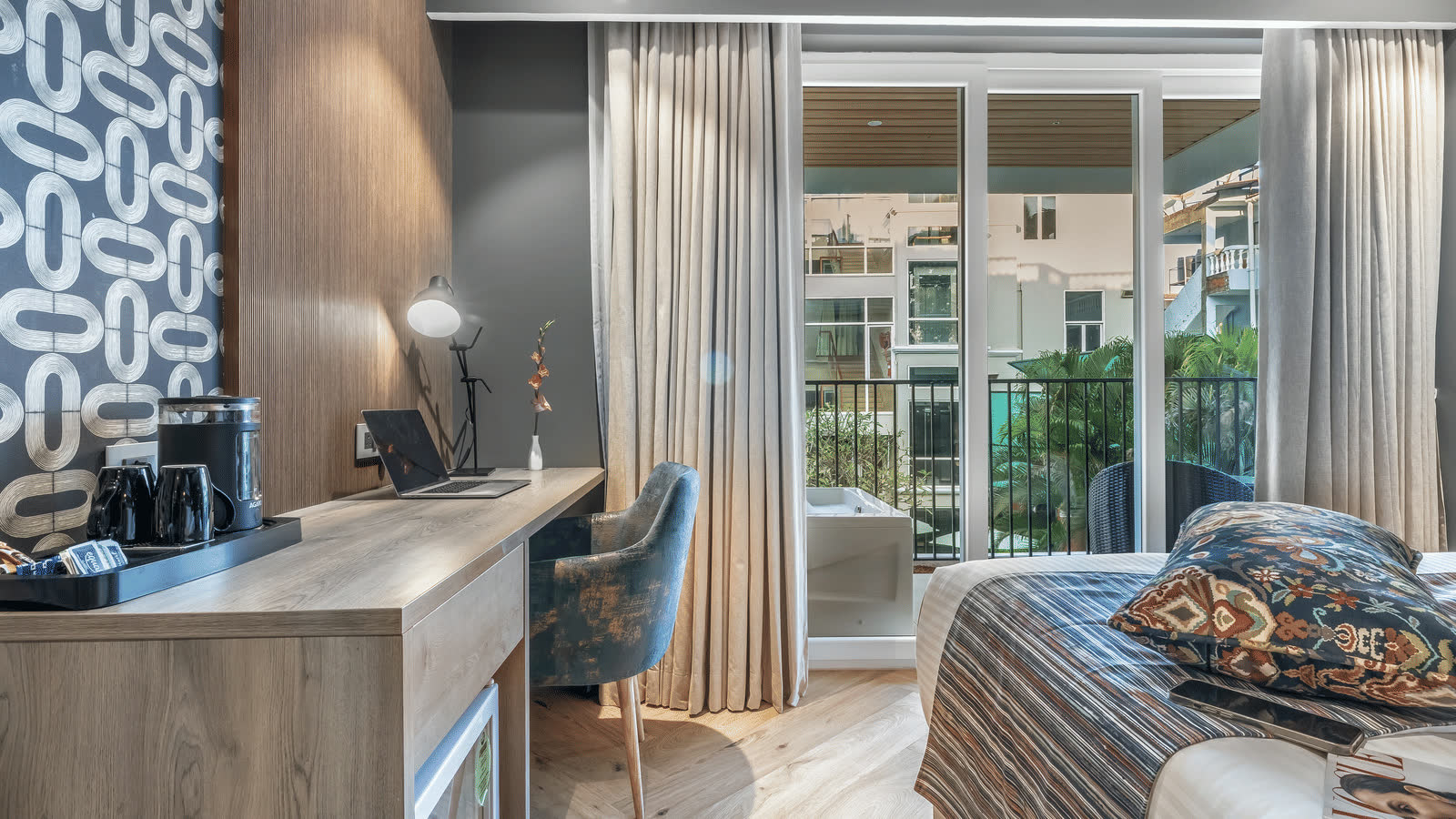
Two days, two moods — one for the coast and its colour, one for the churches, temples and old lanes that made Goa, Goa.
Read the guide