

Feast of St Francis Xavier in Old Goa: a visitor's guide
Old Goa's 3 December feast: novena dates, the Mass timetable, road closures and parking, and how to visit respectfully from Calangute.
Read the guide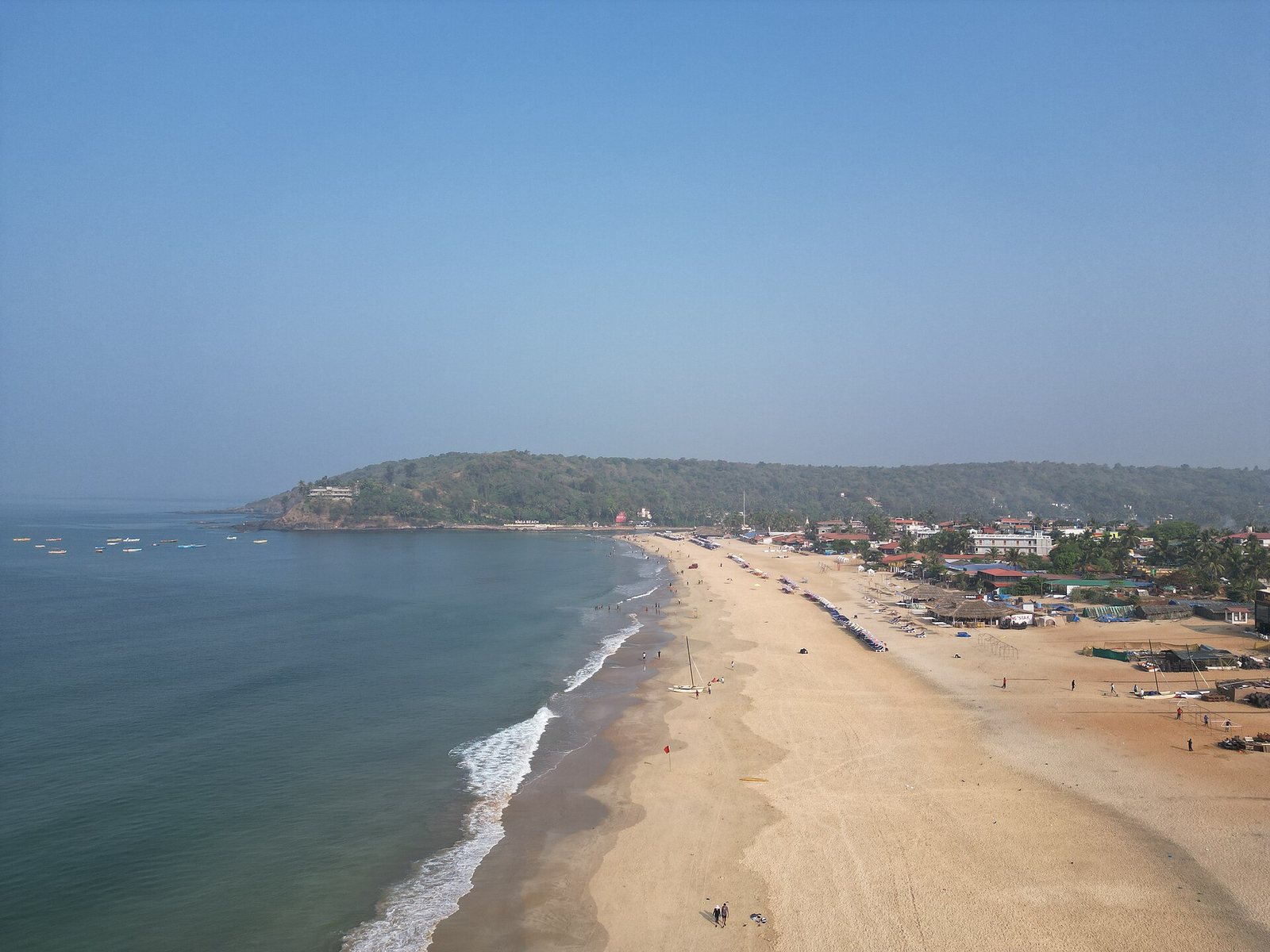
What Goa's red, red-and-yellow and chequered beach flags mean, when lifesavers are on duty, and how to swim safely at Calangute and Baga.
Yes, if you swim inside the lifesavers' red-and-yellow flags between 7 am and sunset, sober and never alone. Never enter the water where a red flag flies, and stay out of the sea entirely during the monsoon.
Yes, as long as you swim on the lifesavers' terms. Calangute and Baga are patrolled by Drishti, the state-appointed lifesaving agency that guards Goa's beaches on behalf of the Department of Tourism, and its lifesavers are on duty from 7 am until sunset. These two beaches are also where more swimmers get into trouble than anywhere else in North Goa: in 2025 Drishti carried out 103 rescues at Calangute and 68 at Baga, the two highest counts in the region.
The terms are short. Swim only inside the red-and-yellow flags, never alone, never after a drink and never after sunset, and stay out of the sea completely in the monsoon. Lifesavers read the sea and set out the flags each morning, so check them every time you arrive, not only on your first day.
Drishti's flag system is the same on every beach it patrols, and it is the quickest way to read the sea. If a lifesaver calls you in, come in: Drishti asks every visitor to listen to the lifesaver on duty.
Drishti now deploys more than 450 lifesavers and beach marshals across 54 beaches, 24 of them in North Goa, and says the coast has more than 100 marked swim zones. Calangute and Baga already had zones in April 2025, when Drishti announced it would mark each one with partition moorings and signage and keep water sports out of them. Zones shift with the sea and the season, so find the lifesaver tower nearest your zone when you arrive: it is where to go for first aid, for advice on the day's sea, or if you lose sight of someone in your group.
All of Goa's beaches are closed for swimming from sunset until 7 am, the hours when no lifesavers are on watch. In Calangute the sun sets a little after 6 pm in November and December and nearer 6:45 pm by March, so plan an afternoon swim with that in mind.
A Goa government beach guide warns swimmers at Calangute about the sudden drop and the rising waves, and Drishti cautions that rip currents can be dangerous even in seemingly calm water. Lifesavers say visitors most often underestimate rip currents, ignore the warnings and swim outside the flagged zones. Calangute is also one of Goa's most popular beaches, so the rescue counts partly reflect the crowds.
Across Goa, Drishti made 548 water rescues in 2025 and helped 829 more people with first aid, searches for missing people and other emergencies. October alone brought 67 rescue incidents, December, the peak of the season, saw the most emergency responses, and more than four in five of the people rescued were Indian.
A rip current is a powerful, narrow channel of fast-moving water that pulls swimmers away from the beach, and the US National Oceanic and Atmospheric Administration (NOAA) notes that the strongest can move faster than an Olympic swimmer. Drishti's rule is to stay out of water where rips are running and to ask the lifesaver on duty before you go in.
If one catches you, do not fight it by swimming straight back to the beach: that is how swimmers tire. Swim parallel to the shore until the pull eases, then head back to land at an angle, as NOAA advises. If you cannot get free, stay calm, wave and call out so the lifesavers can see you.
If you see someone else in trouble, alert the nearest lifesaver and call 112, India's emergency number. Do not go in after them yourself: Drishti warns against attempting a rescue without proper training.
Drishti's rule on drinking is absolute: do not swim, or even bathe in the sea, after any amount of alcohol, and it asks the same of anyone with a medical condition. A senior lifesaver at Calangute describes visitors who drink heavily and then go swimming. Drinking on the beach is also an offence in its own right; our guide to Goa's beach rules and fines has the detail.
Resist a late swim after an evening out in Baga or Calangute: with no lifesavers on watch, no one may see you get into trouble. Save the sea for the morning, once the flags are back out.
Keep off the rocks, which Drishti calls death traps for walkers because of the breaking surf. Never jump or dive from them into the water either: Drishti warns that the depth can be deceptive and could cost you your life.
Drishti asks parents to keep children nearby and watch them closely, and its swim zones include a family section. Keep small children within arm's reach in the water, however shallow it is, and stay in the water with them rather than watching from the sand.
On a crowded December afternoon it is easy to lose sight of a small child, so agree on the nearest lifesaver tower as a meeting point before anyone wanders off. If a child does go missing, go to the tower straight away: tracing missing people is part of the lifesavers' work.
No. During the monsoon, roughly June to September, swimming in the sea is prohibited, red flags go up along the coast and coastal water sports stop. Even wading at the shoreline is discouraged, because strong currents and powerful waves can pull people into deeper water quickly.
Red flags can also go up in any season when the sea turns rough, so a sunny day in November is no guarantee of a swim. If you are coming in the rains, our guide to Goa in the monsoon covers what changes and what to do instead.
Drishti also runs free guided sea swims, called Sagar Safar. In the 2025-26 season, which began in November 2025, its lifesavers led one-hour sessions at 11 am and 4 pm daily on six beaches, four of them in North Goa: Calangute, Baga, Candolim and Sinquerim. Each swim used life jackets and buoyancy aids, with a safety briefing first and a talk on rip currents and sea behaviour at the end. You sign up with the lifesavers on duty and the programme runs all year except the monsoon, so ask at the tower whether sessions are on when you visit.
On red-flag days, or when you simply want calm water, there is our outdoor pool, 4.2 to 5 ft deep and open 10 am to 8 pm, with a separate 2-ft children's pool; children should still have an adult beside them in the water there too. We also provide beach towels for your days on the sand, and our location page shows what else is close to the resort.
The bigger risk at midday is the sun. In its April 2026 summer advisory, Drishti asked visitors to avoid direct sunlight between 12 noon and 3 pm, stay hydrated, wear sunscreen and rest in the shade between swims.
Drishti's 2025 plan divides each swim zone into three sections: one for families, one for men and an exclusive women's space. Layouts can change, so ask the lifesaver on duty which part is which; the same flag rules apply in all three.
Not by default. They lie on the same long stretch of sand, use the same flag system and are patrolled by Drishti too, and Sinquerim recorded the third-highest number of rescues in North Goa in 2025, with 61. On any given day, the right beach is the one where a red-and-yellow swim zone is open.
The nearest beach is about 650 m away, down Holiday Street; check that the stretch you reach has a red-and-yellow swim zone before you go in. The main Calangute beach is about 2.5 km away and Baga about 4.5 km, and our front desk can arrange a taxi or a scooter.
Photo: Baga Beach-Goa India-Andres Larin by Saaremees, CC BY-SA 4.0, via Wikimedia Commons.
Questions about any of this — or a stay to plan around it? Our team replies within a day.
Old Goa's 3 December feast: novena dates, the Mass timetable, road closures and parking, and how to visit respectfully from Calangute.
Read the guide
Getting into IFFI 2026 in Panaji as a visitor: which delegate pass to choose, what it costs, how seat booking works and how to fit films around the beach.
Read the guide
Sizes, beds, views and extras for all six room types at Ocean Palms Goa, and which one suits couples, families of three or friends sharing a room.
Read the guide