
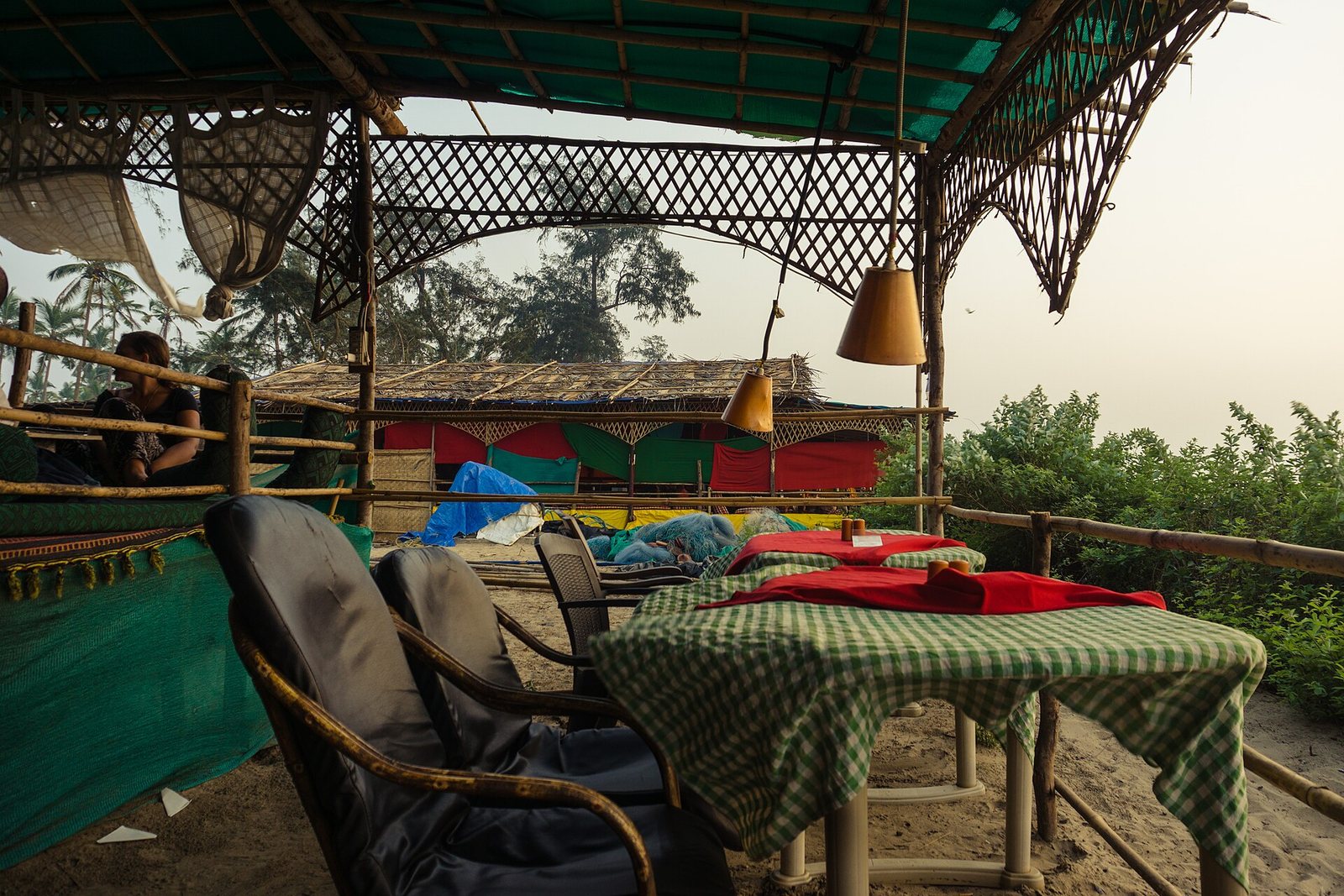
When do Goa's beach shacks open and close?
Goa's beach shacks may trade from 1 September to 31 May; here is what the 2026–27 extension means, when they really open and how to pick a good one.
Read the guide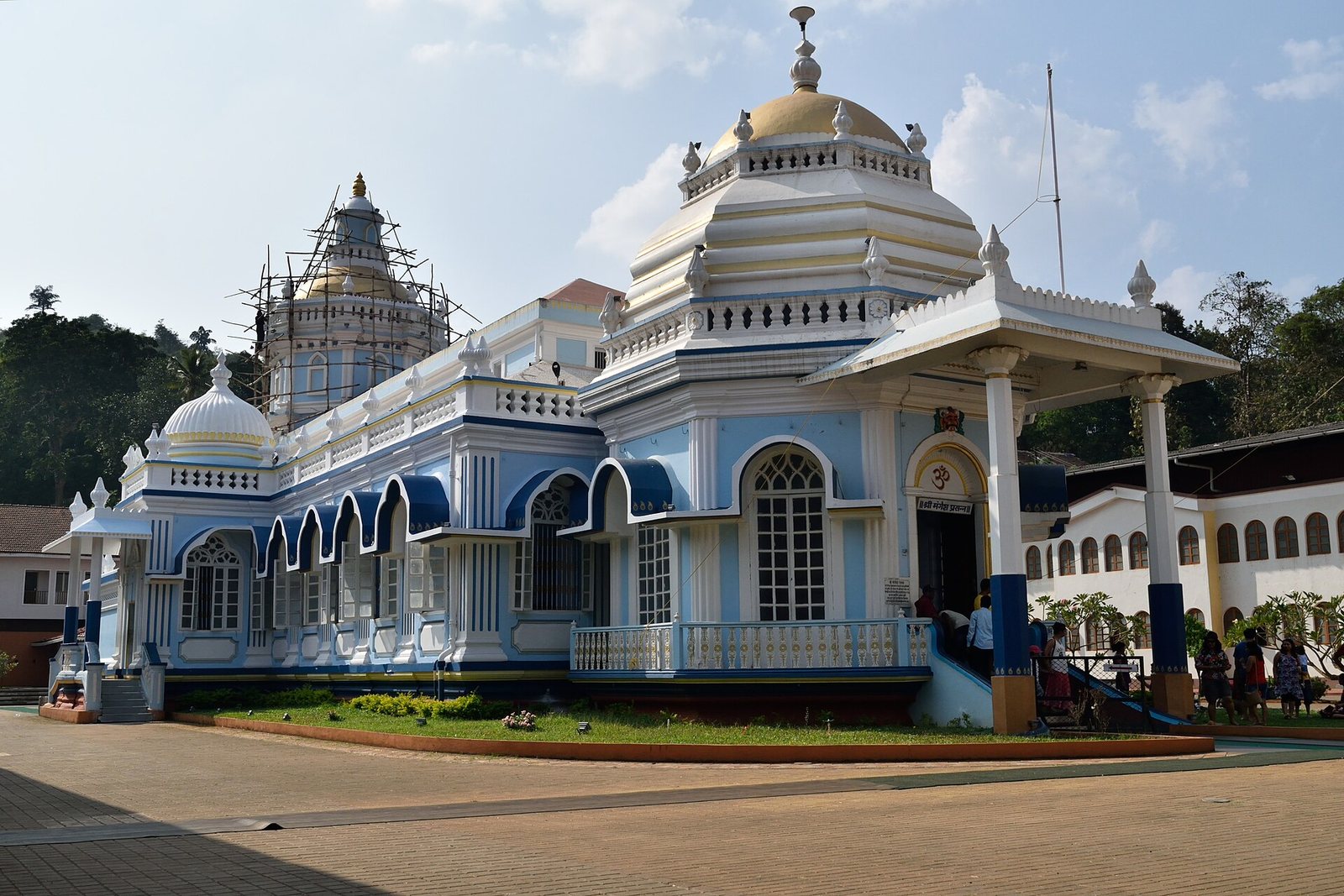
How to visit Mangueshi and Shantadurga from Calangute: why Goa's great temples moved inland, the drive via Panaji, what to see, timings and dress.
Drive via Panaji: both are in Ponda taluka, Mangueshi (Priol) about 22 km from Panaji and Shantadurga (Kavlem) about 33 km. Panaji is 13 km from Ocean Palms Goa. Go early, dress modestly and check timings on the day.
Two of Goa's best-known Hindu temples stand a short drive apart in Ponda taluka, inland from Panaji: Shri Mangesh at Priol, usually called Mangueshi, and Shree Shantadurga at Kavlem. Both deities were carried here in the 1560s from villages near the Zuari river, and both are working temples where worship goes on every day. From Calangute they make a comfortable half-day by car, or a full day with a spice farm and lunch.
Each is the kuldevta, or family deity, of many families, and devotees travel from other states to pray, so the mood is devotional rather than touristy. Go in the morning, dress as you would for any temple in India, and treat published timings as a guide rather than a promise.
Shri Mangesh first stood at Kushasthali, today's Cortalim, on the banks of the Zuari, and the goddess Shantadurga at nearby Keloshi (Quelossim). In the 1560s, as temples in the Portuguese-held lands now called the Old Conquests were being destroyed, devotees carried the images across the river by night into Ponda, then under Adil Shahi rule. The Mangesh linga's move is dated to 1560. The Shantadurga temple trust, citing Portuguese records, places the goddess's move between January and November 1566.
The same happened across the Old Conquests, which is why, as Goa's Department of Information and Publicity explains, most of the temples that were moved ended up in Ponda taluka. Some later picked up touches from the Portuguese era: the department singles out Mangueshi and the nearby Mahalasa temple at Mardol.
The buildings you see are much younger than the 1560s. Mangueshi was rebuilt under Maratha rule and again in 1890, and a renovation completed in 1973 set a golden kalash above its shrine. Shantadurga's present temple dates from between 1713 and 1738; the trust credits Naroram Mantri, a minister at the court of the Maratha ruler Shahu, with starting the building around 1730. For the wider picture of faith in Goa today, see our guide to Hindu and Catholic life around Calangute.
Both temples lie off the highway that runs from Panaji past Old Goa towards Ponda. Mangueshi, at Priol, is the nearer, about 22 km from Panaji. Shantadurga is at Kavlem, near Ponda town, about 33 km from Panaji according to its temple trust. Panaji is 13 km from Ocean Palms Goa, and our location page sets out the resort's other distances.
A car with a driver is the easiest way: no navigating, no parking, and someone waiting while you are inside each temple. Our Front Desk can arrange a chauffeur-driven or self-drive car; ask for the current rate when you book, and agree the route and waiting time before you set off. Our guide to hiring a taxi for a day explains how day hire usually works in Goa.
Mangueshi sits on a hillock among green hills, and its name comes from a legend. The goddess Parvati, frightened by Shiva in the form of a tiger, cried 'Mam Girish trahi' (save me, lord of the mountain), and the words became Mangirish, then Mangesh. Where a traditional Hindu temple rises in a pyramidal tower over the shrine, Mangueshi has a dome, crowned with its golden kalash since 1973.
In the courtyard stands a seven-storey deepastambha, a lamp tower built to hold rows of oil lamps. Look too for the temple tank, with a small shrine to the goddess Santeri beside it, and for the agrashalas, the rest houses where pilgrims stay. In Goan temple tradition a tank like this is a tirthastan, where devotees bathe before worship on festival days, so treat it as part of the temple rather than a pond.
On Monday evenings the deity is traditionally carried out in a palkhi, or palanquin, with music, before the evening aarti. If you would like to see it, ask locally about the time on the day.
Shantadurga is the form of the goddess who made peace between Vishnu and Shiva, and the temple trust describes her image as flanked by the two gods. India's official tourism site presents the temple as a meeting of Hindu and Portuguese styles, and its broad courtyard holds small shrines to other deities around the central hall.
The temple faces east. You enter through a large gateway topped by the nagarkhana, the drum house, where drums and other instruments are played three times a day, and in front of the temple rises a tall deepastambha that is lit at festivals. A lake lies beyond the front wall, guest houses flank the temple, and a short way to the south is the Kavlem Math, the monastery linked to the temple.
The temple trust runs a canteen serving complete pure-vegetarian meals, handy if you are not heading on to a spice farm for lunch. On Panchami days, the fifth day of a lunar fortnight, the goddess is taken out in a palkhi, and the trust posts its list of Panchami dates on its website.
India's official tourism site lists Shantadurga as open from 6 AM to 8:30 PM. We found no official listing of Mangueshi's hours, and both temples change their routine for aartis and festivals, so treat any timings as a guide and check on the day. Mornings suit a visit best in any case: it is cooler, and you will be walking barefoot on stone floors.
Both temples hold their annual jatras in the Hindu month of Magha, usually in January or February, and Navaratri, in September or October, is a major festival at each. Mangueshi, a Shiva temple, also marks Mahashivaratri, in February or March, on a grand scale. Festival days are a joy to watch but bring big crowds, heavy traffic and long waits, and their dates follow the lunar calendar, so check them with the temple before planning around one.
Dress as you would for any temple in India. Cover your shoulders and knees, save beachwear and very short or sleeveless clothes for the beach, and keep a stole or sarong in your bag. Temples set their own rules on dress, so if in doubt, err on the side of modesty. Our guide to what to wear away from the beach has more detail.
Shoes come off before you enter the temple buildings, so wear sandals that slip on and off easily. Keep your camera for the courtyards and lamp towers; inside, and above all near the sanctum, assume photography is not allowed unless a sign or temple staff say otherwise. If you follow worshippers around the shrine, move the same way round as they do, keep your voice low during aarti, and do not touch the images or step into areas kept for the priests.
Set off soon after breakfast and visit Mangueshi first, as it is the nearer of the two. Allow about an hour at each temple, longer if you stay for an aarti or a canteen lunch.
Add a spice plantation and the outing fills a day. India's official tourism site suggests the Sahakari Spice Farm as a visit near Shantadurga, and our comparison of Goa's spice farms will help you choose between it and the other plantations around Ponda. The temples also make a good plan for a monsoon day, when the sea is for looking at rather than swimming in.
Yes. Mangueshi, Mangeshi, Manguesh and Shri Mangesh all refer to the temple at Priol, and official sites use several of these spellings. Shantadurga needs more care: Goa has several Shantadurga temples, so tell your driver you mean the one at Kavlem (also written Kavalem or Kavale), near Ponda.
Yes, with a change in Panaji. Kadamba (KTCL) buses run between Calangute and Panaji, and many Panaji to Ponda services follow the highway via Old Goa, but linking the two temples without a car is slow. Our guide to Kadamba buses from Calangute explains how to find routes and times.
Old Goa lies on the main road between Panaji and Ponda, so it is easy to stop on the way. Its churches deserve unhurried time, though, so add them only if you are happy with a long day; otherwise give Old Goa a morning of its own.
Mangueshi, if time is short: it is the nearer of the two and fits easily into a morning. Choose Shantadurga instead if you would like a vegetarian lunch at the temple canteen.
Photo: Mangueshi Temple BNK by Nikhilb239, CC BY-SA 4.0, via Wikimedia Commons.
Questions about any of this — or a stay to plan around it? Our team replies within a day.
Goa's beach shacks may trade from 1 September to 31 May; here is what the 2026–27 extension means, when they really open and how to pick a good one.
Read the guide
Distances, the real cost of changing hotels and three South Goa days out from Calangute, to help you decide whether one base is enough.
Read the guide
What a beachfront room in Calangute actually buys you, who it suits, what to check before booking near the sand, and how Ocean Palms Goa compares.
Read the guide